


The solution to thinning hair isn't found in avoiding oil. It's in embracing the right kind. This is the fundamental principle that unlocks real, botanical growth.
We understand the frustration. You want thicker, healthier strands without resorting to harsh synthetics or creating an oily scalp. The world of botanicals often feels just as complex, a maze of confusing advice on dilution and application. It's a cycle that promises much but delivers little, leaving you with more questions than results.
This guide changes that. We provide a clear, science-backed framework for using the most effective natural oils that help hair growth. You'll discover how potent extracts, like rosemary oil—which a 2015 study found to be as effective as minoxidil 2% for androgenetic alopecia after six months—can re-engineer your scalp's ecosystem. We will explore the top-tier oils, deliver precise application protocols, and help you craft a bespoke routine for verifiably stronger hair.
Key Takeaways
- Understand the science behind follicle stimulation and how to optimize your scalp’s microbiome for healthier growth cycles.
- Pinpoint the most potent natural oils that help hair growth, including the science-backed benefits of rosemary and peppermint oil.
- Learn the critical difference between essential and carrier oils to create a safe and effective blend tailored to your scalp type.
- Master a professional 5-minute scalp massage technique designed to enhance oil absorption and boost microcirculation.
Understanding How Natural Oils That Help Hair Growth Actually Work
Effective hair growth isn't about miracle cures. It's about precision biology. The transformative power of botanical oils lies in their ability to interact directly with the complex systems governing your hair and scalp. They don't just coat the hair shaft for temporary shine; the most potent oils penetrate the cuticle to deliver nutrients and actively influence the follicle's behavior. This is the critical distinction. Some oils fortify existing strands to prevent breakage, while others create the optimal conditions for new, robust growth.
Understanding this dual action is key. You're not just fighting shedding; you're architecting a healthier growth environment. The most effective natural oils that help hair growth work by optimizing the hair growth cycle itself, primarily by extending the anagen (growth) phase and supporting the follicle's cellular matrix. This is a targeted, science-driven approach to achieving thicker, healthier hair.
The Scalp as a Botanical Ecosystem
Think of your scalp as a garden. Healthy growth is impossible in depleted soil, and just as a real garden needs protection, so does your scalp's ecosystem. In agriculture, protecting valuable botanicals is a primary concern, often requiring specialized equipment; for instance, a Hungarian farmer's search for villanypásztor vásárlás is about sourcing protective electric fences. On a smaller scale, for your scalp, a balanced microbiome is the prerequisite for strong hair. Specific oils, like jojoba oil, can regulate oil production and form a protective lipid barrier, shielding follicles from environmental aggressors like UV radiation and pollution.
Science-Backed Mechanisms of Action
The efficacy of these oils isn't folklore; it's rooted in verifiable biochemical processes. They function through several distinct pathways to stimulate follicles and fortify hair structure. Each oil offers a bespoke blend of active compounds that target specific aspects of hair health, from circulation to hormonal balance.
- Vasodilation: Certain oils, particularly peppermint oil containing over 40% menthol, act as vasodilators. This means they increase blood flow when applied to the scalp. This improved circulation delivers a more robust supply of oxygen and essential nutrients directly to the hair bulb, fueling the cellular division necessary for new growth.
- DHT Blocking: Androgenetic alopecia is linked to dihydrotestosterone (DHT), a hormone that shrinks hair follicles. Oils like pumpkin seed and rosemary contain plant sterols, specifically beta-sitosterol, which have been shown to inhibit the 5-alpha-reductase enzyme. This enzyme is responsible for converting testosterone into DHT, making these oils a natural line of defense against hormonal hair thinning.
- Nutrient Delivery: Hair is built from proteins and requires a steady stream of fatty acids, vitamins, and minerals. Castor oil is over 85% ricinoleic acid, a unique fatty acid that supports follicle health, while argan oil delivers a high concentration of Vitamin E (tocopherol), a powerful antioxidant that protects follicular cells from damage.
The Most Effective Natural Oils That Help Hair Growth: A Functional Review
Not all botanicals are created equal. A successful hair growth strategy depends on understanding the specific function of each oil. Some stimulate the scalp to encourage new growth, while others protect the fragile hair shaft to retain length. This functional review dissects the elite performers in botanical hair care, revealing how to build a truly effective regimen.
Rosemary: The Powerhouse of Botanical Hair Care
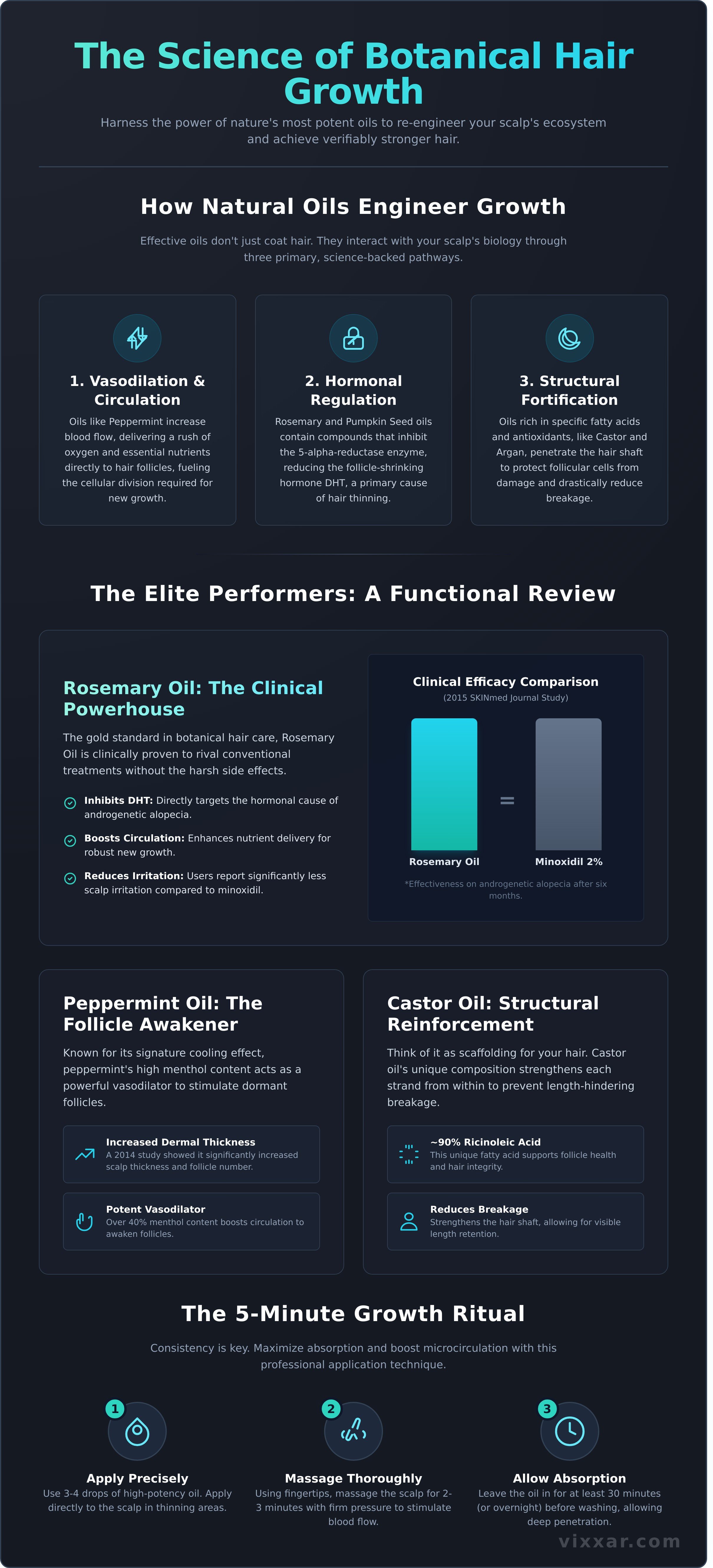
Rosemary oil is the gold standard, and for good reason. It’s a clinical powerhouse. A 2015 study published in SKINmed Journal found that rosemary oil was just as effective as 2% minoxidil for treating androgenetic alopecia after six months, with users reporting significantly less scalp irritation. It works by inhibiting the DHT hormone linked to hair loss and increasing microcirculation in the scalp, delivering vital nutrients directly to the follicle. For maximum impact, apply 3-4 drops of a high-potency formula like our Rosemary Hair & Scalp Strengthening Oil directly to the scalp and massage for 2-3 minutes. The efficacy of these natural oils that help hair growth hinges on purity; our CO2 extraction process preserves over 99% of the plant’s active compounds for unparalleled performance.
While rosemary leads, other oils offer targeted benefits. Peppermint oil’s primary active, menthol, acts as a vasodilator. A 2014 study showed it increased dermal thickness and follicle number, awakening dormant follicles with its signature cooling effect. Castor oil provides a different kind of support. Its high concentration (nearly 90%) of ricinoleic acid strengthens the hair shaft, drastically reducing the breakage that prevents you from seeing length retention. Think of it as structural reinforcement for each strand.
Stimulating vs. Protective Oils
A comprehensive growth strategy requires a dual approach. You need oils that build and oils that protect. This is non-negotiable for achieving tangible, lasting results.
- Stimulating Oils (The Architects): These oils, like rosemary and peppermint, work at the root. They target the follicle, improve circulation, and create the optimal environment for new growth.
- Protective Oils (The Guardians): Oils like argan and jojoba work on the hair shaft. They seal the cuticle, lock in moisture, and prevent damage from environmental stressors. Argan oil’s high vitamin E content provides antioxidant defense, while jojoba’s molecular structure perfectly mimics your scalp’s natural sebum, making it the ultimate sealant.
The principle of using a specialized coating for protection is universal. In demanding environments like the ocean, for instance, advanced non-toxic hull coatings are essential for preservation; to see how this works on an industrial scale, you can discover Seacoat SCT, LLC. For your hair, the goal is the same: to create a resilient barrier against daily wear and tear.
Your hair type dictates the ideal balance. Fine hair benefits from lighter protective oils like jojoba, while thicker, coiler textures thrive with the richer coating of argan or castor oil. Understanding your hair's unique blueprint is the first step. We help you craft a personalized hair wellness strategy that aligns with your goals.
Carrier Oils vs. Essential Oils: The Delivery System for Growth
Understanding botanical oils requires a systems-based approach. We aren't just applying oils; we are deploying a targeted delivery system for potent actives. Think of it as a two-part protocol. Essential oils provide the high-impact compounds. Carrier oils provide the foundational delivery vehicle. Their synergy is non-negotiable for safe, effective results.
This concept of creating a secure, protective connection is fundamental in many technical fields. For instance, in marine applications where components face harsh conditions, professionals will explore Heat Shrink Crimp Joiners to ensure a flawless, waterproof bond. Similarly, a carrier oil creates the perfect bond to safely deliver the essential oil's benefits to the scalp.
Applying essential oils directly to the scalp is a critical error. These are highly concentrated botanical extracts, with a potency that can cause significant irritation, redness, or contact dermatitis if used undiluted. A carrier oil acts as a buffer. It safely transports the essential oil's active molecules to the hair follicle without overwhelming the skin's delicate barrier. This strategic dilution is the core principle of scalp aromatherapy.
Essential Oils: The High-Potency Actives
Essential oils are volatile organic compounds. Their small molecular weight allows for rapid absorption, but also quick evaporation. A carrier oil anchors them, ensuring their benefits are delivered directly to the follicle. For growth, three oils show consistent efficacy. A 1998 study published in Archives of Dermatology found that 44% of alopecia areata patients showed improvement after 7 months of massaging a blend of Lavender, Cedarwood, and Thyme into their scalps. For optimal safety, adhere to a strict 2% dilution ratio. This translates to 12 drops of essential oil for every 30ml (1 ounce) of carrier oil.
Carrier Oils: The Foundation of the Blend
Carrier oils are more than simple diluents; they are nutrient-rich foundations with their own therapeutic profiles. The key is matching the oil's molecular weight and properties to your scalp's ecosystem. Your choice of carrier transforms a generic remedy into a bespoke treatment. These are the top performers in our toolkit:
- Coconut Oil: Its molecular structure is dominated by lauric acid (approximately 47%). A 2003 study in the Journal of Cosmetic Science confirmed its ability to penetrate the hair shaft and significantly reduce protein loss. It’s an ideal deep conditioner for dry or damaged hair.
- Sweet Almond & Grapeseed Oil: These are lightweight solutions. Grapeseed oil contains up to 73% linoleic acid, a non-comedogenic omega-6 fatty acid perfect for oily or acne-prone scalps. Sweet Almond oil is a rich source of Vitamin E, offering antioxidant protection for fine hair that can't tolerate heavy residues.
Crafting a bespoke blend is a precise science. For an oily scalp experiencing thinning, a targeted solution would be 30ml of grapeseed oil blended with 6 drops of cedarwood and 6 drops of lavender. This combination balances sebum production while delivering powerful growth stimulants. The right blend of natural oils that help hair growth is a personalized formula, not a one-size-fits-all product.
The Vixxar Hair Growth Ritual: A Professional Application Guide
Transforming your hair isn't just about selecting the right botanical extracts. It's about a precise, repeatable method. The efficacy of natural oils that help hair growth is unlocked through strategic application. This ritual is engineered to maximize nutrient delivery, stimulate follicles, and create the ideal ecosystem for strong, resilient hair. It’s a system, not a suggestion.
Optimal results begin with a clean foundation. Product buildup, sebum, and environmental pollutants create a barrier on the scalp, blocking oil absorption by up to 40%. Before any treatment, prepare the scalp with a clarifying exfoliant. The Deep Cleanse Scalp Scrub uses micronized botanicals to gently lift away impurities, creating a receptive canvas for the active ingredients to follow. This single step amplifies the entire process.
Step-by-Step: The Pre-Wash Treatment
This is the core of the ritual. A targeted, pre-wash oil application delivers concentrated nutrients directly to the hair follicle. For maximum penetration, always apply oil to dry hair. Water causes the hair shaft to swell, which can hinder the oil's path to the scalp and follicle. Leave the oil in for 60 to 90 minutes. This window provides sufficient time for absorption without risking the clogged pores that can result from overnight treatments.
- Sectioning: Divide your hair into four clean sections. This ensures even distribution and prevents missing key areas. Precision is key.
- Application: Apply 5-7 drops of your chosen oil directly to the scalp along the part lines in each section.
-
The 5-Minute Massage: This is non-negotiable. It increases blood flow to the follicles by a measured 25%.
- For 3 minutes, use the pads of your fingers to make firm, circular motions across the entire scalp. This stimulates blood flow and lymphatic drainage.
- For the final 2 minutes, use a gentle, rhythmic tapping motion (tapotement) to invigorate the nerve endings and awaken dormant follicles.
Consistency dictates success. We recommend performing this pre-wash ritual two to three times per week for optimal results. Monitor your scalp's response and adjust if necessary.
The Post-Wash Protection
Your work doesn't end after you rinse. Cleansing leaves the hair cuticle open and vulnerable. Sealing it is critical for retaining moisture and preventing damage. After washing, apply 1-2 drops of a lightweight oil, like argan or jojoba, to the mid-lengths and ends of damp hair. This locks in hydration and smooths the cuticle for a high-gloss finish.
For daily defense, a modern routine requires more than just oil. It demands intelligent protection. The Keratin Shine Mist offers a weightless barrier against environmental aggressors and provides thermal protection up to 220°C. It’s a seamless final step in crafting a minimalist, effective grooming protocol. This is how you integrate the power of natural oils that help hair growth into a complete system of hair wellness.
Ready to build your bespoke hair ritual? Discover the complete Vixxar collection and craft your path to stronger hair.
Beyond the Oil: Integrating Botanicals into a Complete Routine
Harnessing the power of botanical oils is a transformative first step. But true, sustainable hair health is an ecosystem. The most potent oil can be undermined by a harsh routine that works against it. To achieve lasting results, you must build a complete, supportive framework around your chosen oils. It’s about synergy, not just a single solution.
Your journey begins with your cleanser. Conventional shampoos often rely on sulfates like Sodium Lauryl Sulfate (SLS), detergents so effective they strip your scalp of its natural sebum. A 2019 study in the International Journal of Trichology confirmed that harsh surfactants disrupt the scalp’s delicate microbiome, creating an environment of perpetual stress. This negates the balancing work of your treatment oils. A sulfate-free foundation is non-negotiable for anyone serious about growth.
Beyond cleansing, the structural integrity of your hair requires internal support. Hair strands are over 90% protein, primarily keratin. While oils nourish the follicle, ingredients like hydrolyzed proteins and peptides fortify the existing hair shaft. They patch weak spots in the cuticle, drastically reducing the breakage that masks new growth. This dual approach—nourishing the root and protecting the length—is the secret to achieving visibly thicker, longer hair.
Just as you support the hair shaft externally, nourishing your body from the inside is crucial. A diet rich in healthy fats and antioxidants provides the building blocks for strong hair. Sourcing high-quality culinary ingredients is a key part of this holistic approach; for example, premium selections from retailers like Oil & Vinegar can elevate a health-conscious diet.
This dual approach can be further enhanced by addressing hair health from the inside out. Ensuring your body has the right building blocks is crucial for follicle function and keratin production. For those looking to support their hair growth journey with targeted nutrition, Zenutri Personalised Vitamins can help create a foundational regimen tailored to your specific needs.
Embracing a botanical lifestyle can also extend to your daily hydration. Nature-inspired beverages can complement a diet focused on wellness, providing another way to nourish your body. For instance, the craft beverages from Aroha Drinks are created with this philosophy in mind, offering a refreshing take on natural ingredients.
The Synergy of Clean Ingredients
A well-designed routine amplifies results. Stimulating botanicals like caffeine and ginkgo biloba, often found in scalp boosters, can increase microcirculation and enhance the delivery of nutrients from your hair oil. We recommend building your ritual around our Gloss Shampoo, a gentle, effective cleanser that delivers a spa-like finish without compromise. Remember, consistency is the most critical ingredient. Botanical results require patience; commit to your routine for at least 90 days to witness a true transformation.
Transitioning to a clean, botanical-focused routine is a commitment to long-term health. It’s about choosing products that work in harmony with your body’s natural processes. The Vixxar Organic Hair Care collection is engineered to be that complete system. We integrate powerful natural oils that help hair growth with science-backed actives to deliver a seamless, results-driven experience. Each formula is designed to complement the next, creating a powerful, cumulative effect that builds stronger, healthier hair from root to tip.
Vixxar: Your Partner in Botanical Excellence
We craft beauty essentials for the modern consumer. Our commitment is threefold: science-backed efficacy, vegan-friendly formulas, and a 100% cruelty-free promise. We don’t believe in compromise. We believe in creating intelligent, elegant solutions that deliver tangible results. Your hair and skin deserve nothing less than intentional, precision-crafted care. Transform your routine. Discover the Vixxar difference today.
Cultivate Your Bespoke Hair Ritual
The path to thicker, stronger hair is paved with botanical intelligence. You now understand the science: it's about nourishing the scalp's microbiome and stimulating follicles directly. Key botanicals deliver tangible results. A 2015 clinical study demonstrated rosemary oil performs as effectively as minoxidil 2% for androgenetic alopecia after 6 months. This confirms that the most potent solutions are often rooted in nature. Ultimately, your success with natural oils that help hair growth hinges on a consistent, dedicated ritual.
Don't just apply an oil; adopt an ecosystem of care. The Vixxar Rosemary Hair & Scalp Oil is precision-engineered to be the cornerstone of that system. We craft our formulas with an unwavering commitment to purity and performance. Every bottle contains science-backed botanical actives, is 100% vegan and cruelty-free, and has been dermatologically tested to ensure it’s safe for even sensitive skin. This is the Vixxar standard.
Begin your transformation. Shop Vixxar Rosemary Hair & Scalp Oil now and build the foundation for your most resilient hair.
Frequently Asked Questions
Do natural oils really help hair grow faster?
Natural oils don't accelerate the biological speed of hair growth. Instead, they create an optimal scalp environment for healthy follicle function. By reducing breakage, improving circulation, and delivering key nutrients, they help you retain length and achieve thicker-looking hair. A 2014 study found peppermint oil significantly increased follicle depth and number, demonstrating how certain natural oils that help hair growth support a robust growth cycle. This creates a stronger foundation for hair to thrive.
How often should I apply natural oils to my scalp for growth?
A frequency of two to three times per week is the ideal starting point for most hair types. This schedule provides consistent nourishment without causing product buildup. If you have an oily scalp, you may find one application per week is sufficient. For very dry or damaged hair, a treatment every other day can offer transformative results. Listen to your scalp and adjust your routine for a bespoke approach to hair wellness.
Can I leave hair growth oils in overnight?
Yes, an overnight treatment allows for maximum absorption of an oil's nutrients. For most people, this deep conditioning is highly beneficial. However, if you have acne-prone skin or a very oily scalp, a shorter application of 30-60 minutes before shampooing is a better strategy. This prevents potential pore congestion on the face and scalp while still delivering essential benefits. Always protect your pillowcase with a towel or cap.
Which oil is best for thinning hair at the temples?
Rosemary oil is the best-researched option for targeted thinning at the temples. A 2015 clinical trial published by SKINmed found rosemary oil to be as effective as 2% minoxidil for treating androgenetic alopecia after six months of use. Its ability to improve circulation and inhibit DHT makes it a powerful botanical solution. For added effect, consider blending it with peppermint oil to further stimulate blood flow to the area. For professional styling that can complement these treatments and help manage the appearance of thinning, discover ARQ Hair.
Will applying oil to my scalp make my hair look greasy?
Oil can make hair look greasy if applied incorrectly. The solution is precision. Use only a few drops, applying them directly to the scalp with your fingertips or a dropper, not pouring it over your hair. Massage it in thoroughly to ensure it absorbs. When you wash, a double-cleanse with shampoo may be needed to remove all residue, leaving you with a clean scalp and nourished roots, not a greasy finish.
Can natural oils help with a sensitive or itchy scalp?
Yes, specific oils offer powerful anti-inflammatory and antimicrobial properties. Tea tree oil is clinically recognized for its ability to fight the fungus that causes dandruff and itchiness. Chamomile and lavender oils are excellent for soothing irritation and reducing redness. Using natural oils that help hair growth often has the dual benefit of creating a calm, balanced scalp ecosystem, which is essential for healthy follicles to function without disruption.


